Crash games have become one of the most recognizable formats in online gaming. The basic idea is simple: a multiplier starts at 1.00x and increases while players decide when to cash out. At an unpredictable point, the round crashes. Anyone who has not cashed out before the crash loses that wager. This simple mechanic is shared by many titles, including Aviator, JetX, Spaceman, and other crash-style games.
Among these games, Aviator Game has attracted significant attention because of its straightforward interface, quick rounds, multiplayer-style presentation, and provably fair approach. But how does it actually compare with other crash games? The answer depends on what you value most: game design, transparency, features, accessibility, or the mathematical characteristics of the game.
What Is a Crash Game?
A crash game is a type of real-money game built around a rising multiplier. Before a round begins, players place their wagers. Once the round starts, the multiplier increases from 1.00x upward.
The objective is to cash out before the multiplier crashes.
For example, if you place a ₹100 wager and successfully cash out at 2.00x, the total return would be ₹200, including the original stake. If the game crashes at 1.80x before you cash out, your wager is lost.
The important point is that the crash point is not something players can reliably predict. Previous rounds do not determine the next result, and a sequence of low or high multipliers does not create a guaranteed opportunity in the following round.
This makes crash games different from many traditional casino games. Instead of waiting for a dealer, spinning reels, or selecting cards, players interact directly with a rapidly changing multiplier.
How Aviator Works
Aviator follows the core crash-game formula while adding features designed around a shared, social-style experience.
The multiplier begins at 1.00x and rises. Players can choose when to cash out, either manually or through available automatic cash-out settings. If the aircraft crashes before a successful cash-out, the wager for that round is lost.
One of the most important characteristics of Aviator is its provably fair system. This type of system is designed to allow users to verify the mathematical basis of completed rounds rather than simply relying on a claim that results are random. Current industry explanations describe Aviator as using cryptographic inputs to generate and verify results.
However, fairness should not be confused with profitability. A provably fair system can demonstrate that a result was generated according to the published mechanism, but it does not mean that players have a guaranteed advantage.
Aviator vs Other Crash Games
Several other titles use the same fundamental concept but differ in presentation, features, mathematical parameters, and verification systems.
Aviator vs JetX
JetX is one of the closest comparisons to Aviator because both games use a rising multiplier and crash mechanic. Players watch the multiplier increase and attempt to cash out before the crash.
The biggest differences tend to be in presentation, game interface, maximum multiplier, and the way each game implements its fairness system.
Aviator is particularly recognized for its aircraft theme and multiplayer presentation. JetX uses a different visual identity while maintaining the same basic gameplay principle.
For beginners, the difference may feel relatively small because the central decision remains the same: when should you cash out?
Neither game provides a reliable strategy for predicting the next crash point.
Read: What Is Aviator Game App | How Aviator Predictor Tools Use Algorithms
Aviator vs Spaceman
Spaceman takes the crash-game concept and gives it a distinctive space-themed presentation. Instead of an aircraft flying upward, the game uses a spaceman character and space-inspired visuals.
From a gameplay perspective, the two are closely related. Both feature a rising multiplier, a predetermined crash point, and a cash-out decision.
The main differences are therefore found in the visual design, interface, available features, and underlying game parameters.
Some industry comparisons list Spaceman with different RTP characteristics from Aviator, illustrating why players should check the specific game’s published information rather than assuming every crash game has identical mathematics.
Aviator vs Lucky Jet
Lucky Jet is another crash-style title built around a rapidly increasing multiplier. Its presentation uses a jetpack-themed character rather than Aviator’s aircraft.
The gameplay remains familiar to anyone who has played Aviator: place a wager, watch the multiplier rise, and cash out before the crash.
The distinction is mainly in the game’s design, features, distribution, and mathematical configuration. Current comparison sources report different RTP and maximum-multiplier figures between the two games, although players should always verify the information displayed by their particular operator.
Aviator vs Other Crash Games
There are now many variations of the crash format. Some use aircraft, rockets, characters, or other animated objects. Others introduce additional betting options, multiple cash-out positions, live elements, or alternative game mechanics.
Despite these differences, most retain the same fundamental structure:
- Place a wager before the round.
- Watch a multiplier increase.
- Decide when to cash out.
- Win if you cash out before the crash.
- Lose the wager if the crash happens first.
This familiarity is one reason crash games are easy for new players to understand.
Explore: About Us | Aviator Game App | Blog | Register | Login | Aviator Demo
Key Differences Between Crash Games
When comparing Aviator with other titles, it is useful to look beyond the graphics.
1. Game Design
Aviator uses an aircraft-based theme with a minimalist interface. The focus is primarily on the multiplier and cash-out decision.
Other games may use characters, rockets, spaceships, or more elaborate animations. If visual presentation matters to you, this can make one game more appealing than another even when the underlying gameplay is similar.
2. Social Features
Aviator is known for its shared-game presentation, where players can see betting activity and interact with features such as chat, depending on the operator’s implementation.
Some competing crash games also provide live-bet displays or social elements, while others focus almost entirely on individual gameplay.
The social component can make Aviator feel more like a live environment rather than a standalone casino game.
3. Provably Fair Verification
Transparency is another important comparison point.
A provably fair system allows completed rounds to be checked using cryptographic information. The purpose is to demonstrate that the outcome was not secretly changed after the relevant inputs were committed.
This is different from simply saying that a game uses a random-number generator. A conventional RNG may be independently tested or certified, while a provably fair system can offer a mechanism for verifying individual results.
Players should therefore look at the actual fairness documentation for each game instead of assuming that every title described as “fair” uses the same verification process.
4. RTP and House Edge
RTP, or Return to Player, is another factor worth considering.
For example, an RTP of 97% represents a theoretical long-term return of ₹97 for every ₹100 wagered across a very large number of bets, not a promise that an individual player will receive ₹97 from a ₹100 deposit or session.
Current industry sources commonly report a 97% RTP figure for Aviator, although players should verify the applicable information through the operator and game documentation before playing.
This distinction matters because RTP does not predict individual rounds. A player could win significantly more or lose significantly more during a short session.
Can You Predict Aviator or Other Crash Games?
One of the biggest myths surrounding crash games is that previous results can be used to accurately predict the next crash.
For example, players may see several low multipliers in a row and believe a high multiplier is “due.” Others may believe that a long sequence of high multipliers means a low crash must be coming.
Neither assumption provides a reliable mathematical advantage.
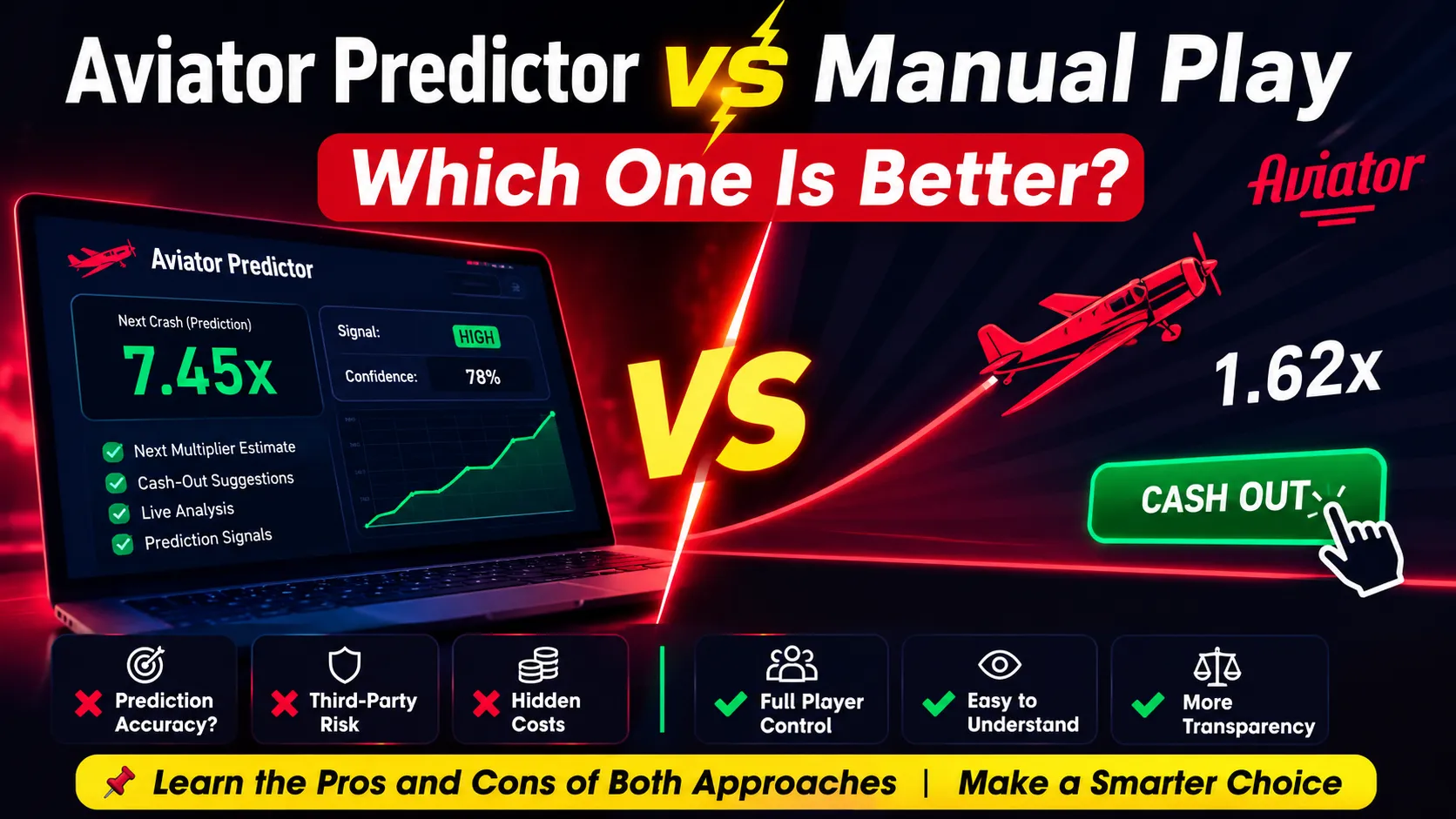
Likewise, third-party websites, apps, Telegram channels, bots, and “predictor” tools that claim to know the next Aviator multiplier should be treated with extreme caution. The cryptographic or random processes used to generate crash outcomes are specifically designed to prevent players from knowing the result in advance.
A prediction tool cannot turn a chance-based game into a guaranteed-win system.
Does a Winning Strategy Work Across Crash Games?
Different betting approaches may change how a player manages individual wagers, but they cannot remove the underlying mathematical house advantage.
For example, some players prefer automatic cash-out targets at lower multipliers, while others aim for higher multipliers and accept a greater risk of losing the wager.
Neither approach guarantees profit.
A lower cash-out target may result in more frequent successful cash-outs, but each successful cash-out produces a smaller multiplier. A higher target can produce a larger return when successful, but the probability of reaching that target is lower.
The same principle applies across crash games.
Therefore, when comparing Aviator with JetX, Spaceman, Lucky Jet, or another title, the choice should not be based on claims that one game provides a secret winning strategy.
Which Crash Game Is Better?
There is no universal answer because “better” depends on what you are looking for.
Aviator may appeal to players who prefer:
- A simple aircraft-themed interface
- Fast-paced rounds
- A shared betting environment
- Manual and automatic cash-out functionality where supported
- Provably fair verification
- A familiar crash-game format
Other crash games may appeal to players who prefer:
- Different themes and animations
- Alternative interface designs
- Different RTP or game parameters
- Specific features unavailable in Aviator
- A particular operator’s payment or promotional options
The most important step is to compare the actual game information rather than choosing solely based on graphics or promotional claims.
Responsible Gaming Matters
Crash games are fast-paced, and that speed can encourage players to place wagers repeatedly without taking time to consider their spending.
A sensible approach is to establish a budget before playing and treat any wager as money that could be lost. Avoid chasing losses by increasing your stake after an unsuccessful round. A previous loss does not make the next round more likely to produce a high multiplier.
It is also important to remember that no crash game can guarantee income.
If gambling stops feeling like entertainment or begins affecting your finances, relationships, work, or daily routine, take a break and consider using responsible-gaming tools available through your operator.
Final Verdict: Aviator vs Other Crash Games
Aviator and other crash games share the same simple concept: the multiplier rises, the game crashes, and players must cash out before the crash. The biggest differences are found in presentation, social features, fairness verification, RTP, game limits, and additional functionality.
Aviator stands out through its aircraft theme, streamlined gameplay, multiplayer-style interface, and emphasis on provably fair verification. Competitors such as JetX, Spaceman, and Lucky Jet offer similar core mechanics with their own visual identities and feature sets.
Ultimately, there is no crash game that guarantees winnings. The smartest comparison is based on transparent game information, published rules, responsible-gaming tools, and the reputation and licensing of the operator providing the game.
If you are comparing Aviator with another crash game, focus on how the game works, how its results can be verified, its published RTP, available features, and the conditions of the operator rather than claims of guaranteed wins or prediction systems.
Disclaimer: This article is for informational and educational purposes only. Aviator and other crash games involve chance, and no strategy or predictor can guarantee winnings. Game availability, rules, RTP, payment methods, and promotions may vary by operator and location. Always check the applicable terms and gamble responsibly.